

Choosing the right water heater for your Kansas City home depends heavily on household size, daily routines, and long-term energy goals. Families with multiple bathrooms, frequent laundry loads, or busy morning routines need a system that can keep up with demand. First Mate Heating & Cooling wants to help you understand the differences between a tank vs. tankless water heater in Kansas City. Understanding the tankless water heater pros and cons can help you make an informed decision.
Understanding the differences between traditional tank and tankless water heaters helps homeowners balance comfort, energy usage, and long-term costs. Factors such as how many showers your family takes in a day and how often the washing machine and dishwasher run can influence your choice. Even your preferred water temperature can determine whether you need a tank or tankless water heater. When you need a water heater upgrade in KC, our plumbing professionals are here to help.
Upfront vs. Lifetime Costs
When comparing water heaters, upfront expenses are often the first consideration. Tank water heaters usually have a lower initial cost, while tankless systems require a higher investment. However, tankless models can save you money in the long run. Evaluating both the purchase price and lifetime operating costs can help you make the best decision.
Many homeowners also overlook how lifestyle impacts long-term operating costs. A household that uses large volumes of hot water each day may see higher utility bills with a tank system due to the constant reheating required. Tankless units help you avoid standby loss. They are more efficient in homes with consistent hot water use.
However, if your usage varies through the week, a tank system may still offer reliable performance without requiring major utility upgrades. Evaluating how your household uses hot water during the coldest months can help you decide.
Additional factors, such as installation complexity and fuel type, also affect cost. Homes may require upgrades for gas or electric lines to accommodate specific systems. Also, maintenance needs may vary between tank and tankless units. Understanding these differences helps homeowners budget accurately and make informed decisions.
Equipment Price, Install Complexity, Fuel Type, and Maintenance
Tank water heaters generally cost $400 to $1,200, depending on the size and fuel type. Installation is usually fairly straightforward with existing plumbing and venting.
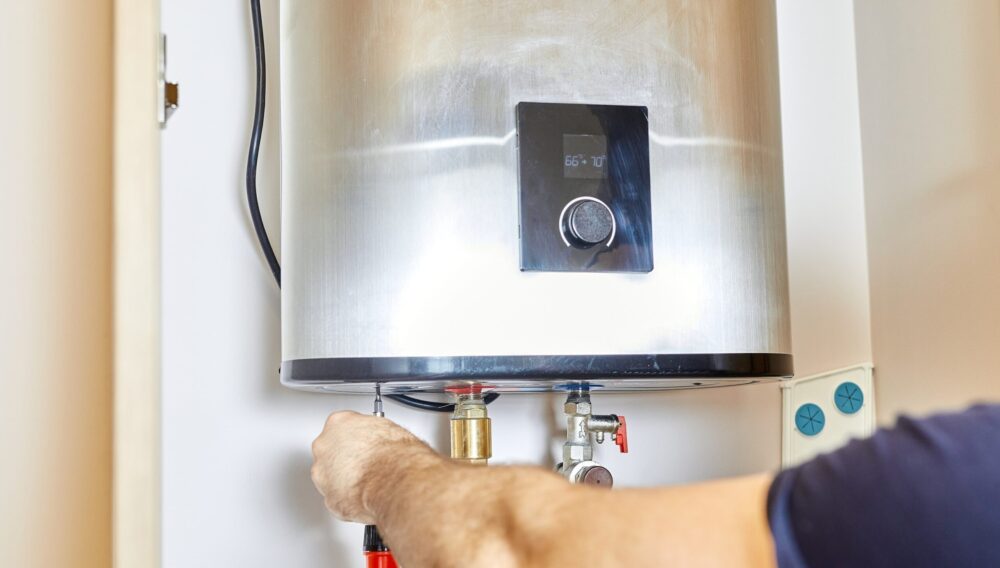
Tankless water heaters can cost between $1,000 and $3,000. Installing a tankless water heater can cost more, especially when upgrading from a tank unit. Gas installations may increase the cost.
Fuel types affect both upfront and operating costs. Natural gas tanks are cheaper to operate than electric units, while tankless gas heaters offer higher efficiency but cost more to install.
Maintenance impacts lifetime costs. Tank systems need periodic flushing to remove sediment, while tankless units require descaling, especially in hard water areas like Kansas City.
Efficiency & Hot‑Water Availability
Water heater efficiency determines both energy costs and hot water availability. Tank models store a limited amount of hot water, which can deplete during heavy use. Tankless systems heat water on demand, offering endless hot water without waiting for long recovery rates. Choosing the right type ensures comfort during peak household use.
Cold winter groundwater in Kansas City also affects performance. Tankless units may produce slightly lower temperatures if the incoming water is very cold. Tanks store preheated water so they can handle short cold snaps. Understanding these efficiency factors ensures your household gets reliable hot water year-round.
Recovery Rate vs. Endless Hot Water; Winter Groundwater Temp Effects
Traditional tanks typically hold 40-80 gallons. Once depleted, homeowners have to wait for the water to reheat. Recovery rates vary based on tank size, fuel type, and water temperature.
Tankless systems provide on-demand, endless hot water. Flow rates, measured in gallons per minute, determine how many fixtures your household can run at once.
Energy efficiency is another important factor. Tankless units operate at 80%-98% efficiency, while older tanks range from 60%-75%. Higher efficiency translates to lower energy bills over time.
Sizing & Features
Proper sizing is essential for performance. Undersized water heaters can leave households without hot water during peak use. Oversized units waste energy. Matching capacity or GPM to your household’s needs ensures consistent comfort.
Kansas City homes often benefit from upgraded efficiency features, given the region’s seasonal temperature changes. Condensing tankless water heaters use a secondary heat exchanger to help improve performance during the winter. Some models also include built-in recirculation loops that keep water moving through the lines. This reduces the time it takes for hot water to reach distant fixtures. When paired with smart controllers, these features can help you fine-tune your energy usage.
Additional features can enhance efficiency and convenience. Options such as recirculation pumps, condensing models, and smart controllers can reduce water waste. They save energy and maintain precise hot water temperatures throughout your home.
Gallon Capacity, GPM, Recirculation, and Condensing Models
The industry measures tank water heaters by gallon capacity. A 50-gallon tank is ideal for two to four people. Larger families may need a tank size of 75-80 gallons.
Recirculation pumps reduce wait times, while condensing models capture extra heat from the exhaust gases to increase efficiency. Smart controllers allow temperature adjustments and usage monitoring.
Repair vs. Replace & Incentives
Water heaters eventually show signs of wear, no matter the type. Recognizing when to repair or replace a unit prevents sudden failures and protects energy efficiency. Age, leaks, and inconsistent performance are important indicators to monitor.
Kansas City homeowners should also consider incentives. Rebates, tax credits, or utility programs can offset part of the cost when upgrading to a high-efficiency or ENERGY STAR-certified system. Combining repair assessments with available incentives can help guide you in your selection.
Age Signs, Leaks, and Potential Rebates/Credits
It’s important to pay attention to how your water heater operates. Knowing the signs it’s time for a replacement or water heater upgrade in KC can help you act before failure occurs.
You may notice these warning signs:
- Older unit
- Frequent repairs
- Leaks
- Tank damage
- Rusty hot water
- Strange noises
Although repairs can extend your water heater’s lifespan, there eventually comes a time when major failures justify replacement. It’s often better to invest in a new, energy-efficient unit than to keep pouring money into a failing water heater.
Energy incentives for high-efficiency models or tankless systems reduce your upfront costs and improve long-term savings. Taking advantage of these programs increases the value of upgrading your system.
Next Steps
Choosing the right water heater begins with understanding your home’s hot water demands, energy goals, and installation conditions. You should start by evaluating your current system’s age, performance issues, and capacity limits.
The next step is determining whether a tank or tankless model better supports your household’s routine. Consider the long-term potential costs. From there, choosing the correct size is essential. Whether that means selecting the right tank capacity or calculating the proper GPM for a tankless unit, we can help.
Our professionals offer installation, maintenance, and repairs for all water heaters. Contact First Mate Heating & Cooling today to request an estimate for a tank or tankless water heater.