
You may have heard that R-410A refrigerant is being phased out. What does that mean for your current system, and do you need to act right away? The short answer is that most homeowners in the KC metro will not wake up to an illegal or unusable air conditioner. The longer answer involves new equipment standards, different refrigerants, and updated safety requirements. These changes will shape future replacements and repairs, but they will not require you to replace your system immediately.
At First Mate Heating & Cooling in Lee’s Summit, MO, we want to help you understand how these changes affect your home. If you’re in the greater Kansas City area, contact us with any questions or to schedule an appointment.
What Is R-410A and Why Is It Being Phased Out?
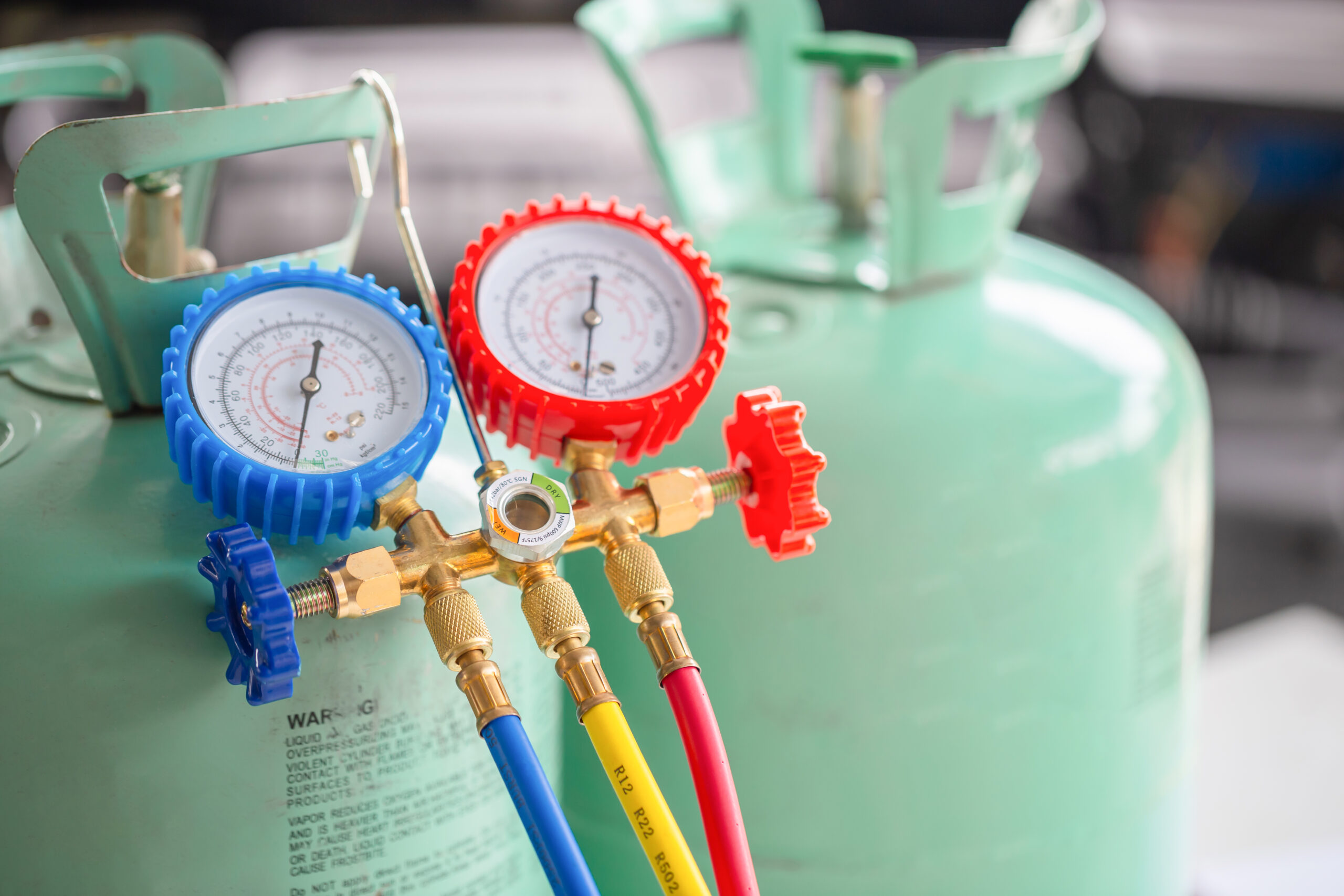
R-410A has been the standard refrigerant in most residential air conditioners and heat pumps since the mid-1990s. It replaced older compounds because it performed well and did not damage the ozone layer. The current change is tied to environmental rules focused on global warming potential. R-410A falls into a category of refrigerants known as Hydrofluorocarbons (HFCs). These are being reduced as part of national and international efforts to reduce greenhouse gases.
The R-410A phase-out does not mean your existing system becomes illegal to own or operate. Homeowners can continue to run their current equipment. Licensed professionals can maintain and repair these systems, including recharging with new refrigerant for your AC. The change targets how new systems are built and what refrigerants manufacturers can use in future models. That distinction matters because it gives you time to plan instead of forcing an immediate decision.
The 2025-2026 Timeline and What the Dates Mean
The timeline for these HVAC refrigerant changes often causes confusion because different rules apply at different points. Manufacturers and importers face limits on producing new equipment that uses higher-impact refrigerants. Those restrictions affect what shows up in distributor warehouses and on showroom floors.
For homeowners, the visible changes come in the form of new labels, updated model numbers, and language around refrigerant type. You may start seeing references to mildly flammable classifications and different service procedures. Installers will follow updated guidelines, and equipment manuals will reflect new standards. The dates are less about when you must replace your system and more about the options available when that time comes.
Which Refrigerants Replace R-410A
Two of the most common replacements you will hear about are R-454B and R-32. Both are designed to lower environmental impact while still delivering the performance homeowners expect from modern air conditioning systems.
These refrigerants fall into a category known as A2L refrigerants. That term means they are mildly flammable. Newer systems will include added safety features such as improved leak detection, updated ventilation requirements, and redesigned components. In daily use, these changes are built into the equipment so homeowners do not need to manage them manually.
Availability and performance between options can vary based on manufacturer and system design. Some brands lean toward one refrigerant over the other. The choices you see during replacement may depend on the equipment line rather than personal preference.
Will Servicing R-410A Systems Get More Expensive?
As production shifts, supplies of older refrigerants may become less predictable. That can lead to price swings for refills and major leak repairs. A system that holds its charge and runs efficiently will likely cost less to maintain than one that develops recurring leaks.
Preventive care becomes more valuable during this transition. Cleaning coils, checking connections, and monitoring system performance help reduce the chance of refrigerant loss. These steps also make it easier to spot issues early. During maintenance, we can catch minor problems before they turn into larger repairs that require a full recharge.
What KC Homeowners Should Do Now
If your system runs well, the best move is to keep it that way. Regular professional maintenance helps extend its usable life and reduces the risk of unexpected repairs due to refrigerant loss. If replacement is on the horizon, start asking questions about compatibility with next-generation systems. Newer equipment designed for updated refrigerants may require changes to wiring, airflow, or placement. Knowing that early helps avoid rushed choices later.
Changes to refrigerants can sound technical, but they do not have to be disruptive. At First Mate Heating & Cooling, we help homeowners review system condition and explain replacement timelines. We can help provide clarity on where your current setup stands or what next-generation equipment could look like in your home.
Schedule a consultation with First Mate Heating & Cooling and start planning with real information, not uncertainty.